

Primary tabs
Posts
Posts
All articles from all albums, full content, latest on top,
not including Doodles
not including Doodles
Page 91 of 133, posts 451 - 455 of 664

Eras end. New ones begin. Space still beckons and humankind will answer the call.
2011 July 8, Atlantis launches, NASA's 135th and final space shuttle launch
(h/t to Sister Toldjah for the inspiration)
(h/t to Sister Toldjah for the inspiration)
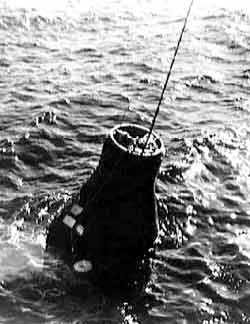 First, the awful price:
Columbia raining down on Texas.
Columbia's crew
I will never forget sitting down with my daughter to watch Mr Rogers, turning on the tube, and seeing Dan Rather with a model of Challenger and feeling suddenly sick to my stomach before he said a word.
Challenger's crew
Hearing that three heroes burned to death on the launchpad.
The Apollo 1 crew, Grissom, White, and Chaffee
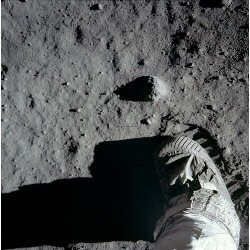 Ah, but, that first flight of Alan Shepard. John Glenn orbiting the globe. I used to know all the names of the Mercury, Gemini, and Apollo astronauts. It was not a bad thing when space travel became so frequent, so common, that I lost track. The first space docking, the first EVA. Circling the moon for the first time, and that tremendous thrill of hearing the light-seconds of delay in communications. Armstrong's bootprint in moondust! Watching men bounce along in 1/6th G.
And that was just the Americans. Despicable Communism aside, from Sputnik to Laika to Gregarin and on through the rest of their accomplishments and disasters, space-age kids like me thrilled to all advances in the exploration of space. Even the first (mostly) scientifically accurate cinematic portrayal of a space station, docking, false gravity, moon base, and planetary travel portrayed in 2001: A Space Odessey was a thrilling part of the ride.
Rockets and space shuttles had two sides, though. Rocketry, disappointingly, supplanted the original space plane program, allegedly because of military interest in developing more accurate bomb delivery (a la ICBM). The space truck was a dangerous, complicated, cumbersome vehicle. So, it was not all as glorious as it was painted, nor as elegant as it might have been. Taxes aplenty were wasted.
And now that we have no future in NASA, is it a bad thing? Might we now see true space planes again, or even seemingly crazy ideas like space elevators? Might we see private investment replacing tax expenditures, rapid entrepreneurial innovation instead of elephantine government plodding? Well, not if O'Bama has anything to say about it, of course, but if we survive him, we may see a greater day than ever in space. Our satellites, and our primitive robots have paved the way to Mars, the farthest planets, and beyond the solar system. In time, human footprints will again mark the dust of other worlds.
Eras end. New ones begin. Space still beckons and humankind will answer the call.
Related links on other sites:
Is Obama invoking JFK with his “Let’s go to Mars” message? —Dacia Nichol, July 9
Father and Son: STS-1 and STS-135, 30 years apart
Is Obama invoking JFK with his “Let’s go to Mars” message? —Dacia Nichol, July 9
Father and Son: STS-1 and STS-135, 30 years apart
•
•
•

•
•

Reading Drudge Report as a story, rather than as separate headlines.
 10:22am Saturday July 2 2011
Kaddaffy's secret weapon: Presidential Seals
U.S. STILL BOMBING LIBYA. Presidential seal blows off limo in Philly; French Woman Dies of E. Coli. Qaddafi threatens attacks in Europe. Geithner may want to go; Will Obama let him?
United States News: Domino effect knocks down several states sequentially.
FEDS STRIKE DOWN STATE'S BAN ON RACE CONSIDERATION IN COLLEGE ADMISSIONS. SoCal Looks to Secede from California. Minnesota Government Shuts Down. UN asks Texas to commute Mexican's death sentence. Washington state closes tourism office. Florida state workers get pink slips, more cuts ahead.
When, Oh! When will this cascade of disastrophe abate!
•
•
•
•
•
Sometimes you have have to hit them twice just to get their attention.

I posted the following on 2011 June 25 at 3:15pm CDST at https://sullivan.house.gov/Forms/WriteYourRep/Default.aspx, to our congressman, John Sullivan:
Dear Representative Sullivan:
A number of Republican congressmen voted against HR2278, including some conservative stalwarts. Please, sir, many of us are wondering about your own reasoning in voting as you did. I suspect you're hearing from a few other constituents about this. Perhaps there's a statement posted online that I missed?
Thank you,
Don Tyler
I received the following email reply in some HTML-like format which my email reader would not display, but was able to pull out the following:
June 28, 2011
Dear Mr. Tyler,
Thank you for contacting me with your thoughts regarding the situation in Libya. I appreciate hearing from you and welcome the opportunity to respond.
As you may know, on March 19, 2011 Operation Odyssey Dawn was launched to enforce the United Nations-approved no-fly zone over Libya. U.S. and North Atlantic Treaty Organization (NATO) forces have targeted the Muammar Qadhafi regime's air defense systems, command and control structures and other capabilities of Qadhafi's armed forces used to attack civilians and civilian populated areas. I believe that Libya's leader, Muammar Qadhafi, must resign from power. He is a dictator and a human rights violator. On March 30, 2011, the U.S. transferred the command of all military operations to NATO.
The American people take the use of military action seriously, as does the House of Representatives. I am disappointed that President Obama did not consult with Congress before his decision to deploy the combat the men and women of our Armed Forces. Should legislation regarding the U.S. military interests in Libya come before me on the House floor, I will keep your thoughts in mind.
Now more than ever, it is important that we continue to support the hard working= men and women in uniform who are serving our country overseas. My thoughts and prayers are with all our nation's military as they continue their mission. I know all Oklahomans are proud of these hard working men and women and= are thankful for the sacrifices both they and their families make on a daily basis to defend our freedom in the Global War on Terror.
Again, thank you for contacting me. It is an honor to serve you= in Washington and Oklahoma. If you would like more information on issues, or would like to share your thoughts with me via e-mail, you may visit= my website at http://sullivan.house.gov/. Please do not hesitate to contact me again should you have further concerns on federal legislation or programs.
John Sullivan
Boilerplate non-response! I will be sending a follow-up letter now. Watch this space.
•
•
•
•
•
We cannot possibly be perfectly prepared for every possible contingency. But we can be ready.
Scene #1. You're one of several young urbanites at a campout with a few friends, after a long day swimming, hiking, and now after a fine meal, joking, laughing. You're mellow; relaxed; right? feel it? (No, Reader, now you're not relaxed because you're looking at that big type in the next sentence.) SUDDENLY A HUGE SNARLING BEAR COMES CHARGING OUT OF THE WOODS AND STRAIGHT AT YOU!
Scene #2. You're out hunting with a few friends. (Just go with me on this, PETAfans.) You're armed with a high-power rifle. (Knowledgable gun person insert brand and calibre.) You're hunting a bear that's been known to attack and kill people. You and your friends are highly trained hunters and you are on his trail. (Good old cut-and-paste:) SUDDENLY A HUGE SNARLING BEAR COMES CHARGING OUT OF THE WOODS AND STRAIGHT AT YOU!
Now, if you're an average person in approximately the first scenario, your first instinctive response will probably not be to charge forward, screaming in rage, straight at the bear and lunge for his eyes or jugglar with whatever was in your hand. Ew. Sorry. I just thought of that as I was writing. No, you're probably going to do something like run away screaming in high-pitched terror, faint, freeze, or muss your underoos. You were, in a word, unprepared. Or in another word or three, unready, inattentive, inalert. Wait, is that a word?
If you're an exceptional person in the second scenario, you kill the bear. Readiness is all.
You're hanging out with folks and someone you thought you liked but weren't sure about repeats an ugly rumor about you that you've resented for a long time. You're enjoying driving your Kia on a winding country road and suddenly in your rear-view mirror, there's a six-wheel extended-bed, extended-cab, jacked-up Ford pick-up right on your tail. (Oh, sure, why not:) Driven by with those four hunters who just killed the bear. They're really the nicest men you'd ever want to meet, and no they haven't been drinking, not one beer, but all you see is their truck, attire, and all those guns. Or, you're absorbed in reading an article that's witty, well-written, informative and casual, and someone comes and interrupts you with an urgent phone call from the IRS.
Readiness is all.
Being perfect in your personal realm as God is in all of creation, means readiness. Are you superman enough to charge back at the bear, armed with two pieces of plastic cutlery? Can you be the soul of graciousness when surprised by a harsh spotlight being placed upon you? Can you have completely confident calm control in the face of potentially threatening situations? Are you able to easily migrate your whole consciousness from that absorbing article to deal with your remarkably upset spouse?
We cannot possibly be perfectly prepared for every possible contingency. Sometimes you're hunting the bear. Sometimes the bear hunts you. Sometimes the bear kills you in your sleeping bag and there's not a whole lot you can do about that, so we're talking about the other times.
We can develop a spirit of readiness.
To be ready is to be unsurprised.
You may not know when or even if the killer bear is going to come charging at you, but you know it's out there.
Graciousness is not the natural hallmark of Ego. Tame the animal mind's vengeful impulse, translate its emotional surge into the desire, not to return an eye for an eye, nor even merely to turn the other cheek, but to respond with a practiced dedication to returning good for evil. In love of your fellow child of God, Supremely desire to de-power the unpleasant encounter.by making everyone both comforted and uplifted.
Regardless of what you face from the material world's agencies, if you remain centered in complete honesty with yourself and with the judges of the world, even in the face of the gravest injustice, you can be confident that your soul is innocent.
Best keep those books and records up-to-date, keep your powder dry, and know where the exit doors are. Get in some target practice if you can, just in case. Practice turning your whole intellectual consciousness and full emotional attention away from that almost-finished article to embrace that screaming spouse the way you would in love of a beloved small child weeping over an owwie.
We cannot be perfectly prepared for each and every thing. In spirit, however, we can be ready. Practice being fully prepared by keeping the mind clean, maintaining focus on the lessons learned from inspiration, and keep acquiring the skills of life through perspiration.
One time driving along a narrow gravel road in the mountains above Pecos, New Mexico, we saw a bear cub, its muzzle nuzzling in a hole, right there in the upsloping side of the road-cut, as we passed by a few feet away. We wanted to stay longer and watch the cub. But we drove on. No need to worry Momma Grizzly.
She charged the bear and punched it in the nose to rescue her dog. "I wasn’t in my right mind at the moment but I would never think of doing it again." Even her boyfriend charged the bear!
Charge Forward — companion Best of Spirits Mindful Webwork
"It was just me between my family and the bear. ... The father said he was able to successfully fend off the aggressive beast because he and his family were mentally prepared for such an encounter in the wild and did not panic."
•
•
•
•
•

Inspired by
D.R. Weeks: The Obama Enemy Appeasement Speech
D.R. Weeks: The Obama Enemy Appeasement Speech
•
•
•
•
•